Rhythm Disruptions: How Crowd Chants Alter Free Throw Accuracy Trends in College Basketball Arenas
Written by Rafael Perry · Jun 20, 2026
Rhythm Disruptions: How Crowd Chants Alter Free Throw Accuracy Trends in College Basketball Arenas
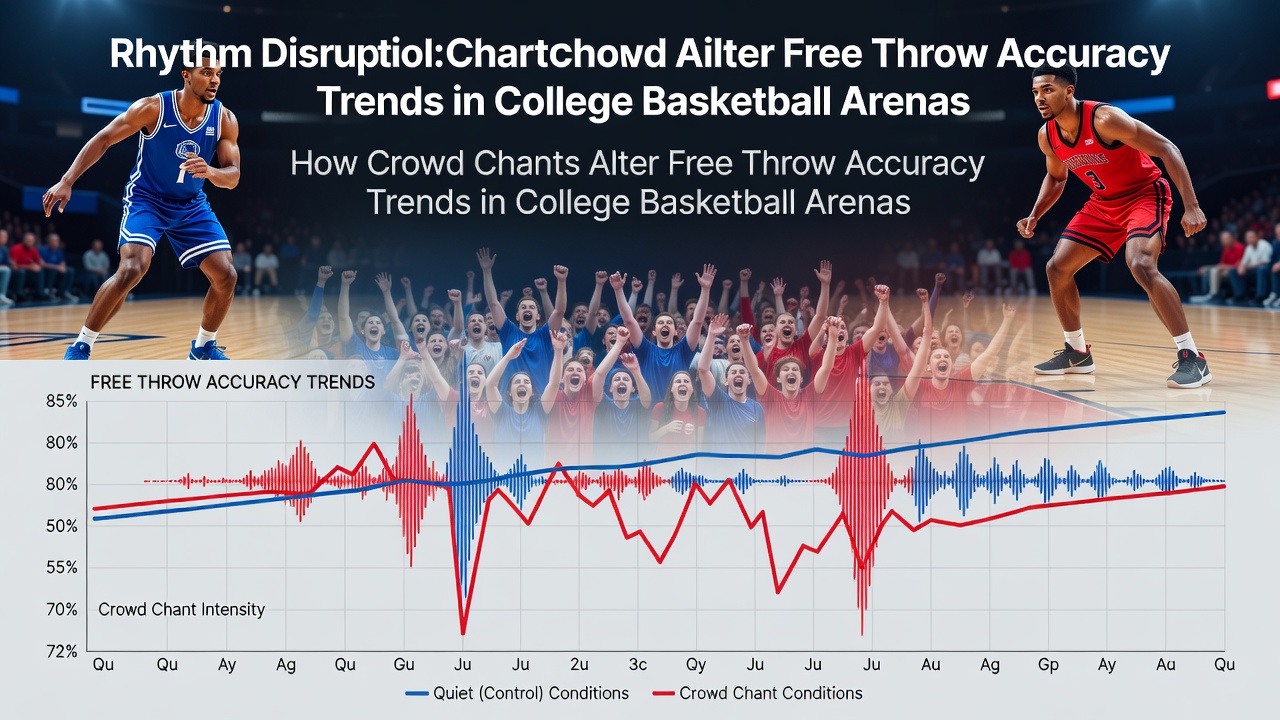
College basketball arenas generate intense acoustic environments where synchronized crowd chants intersect with player routines at the free throw line, and researchers have documented corresponding shifts in shooting percentages across multiple seasons. Data collected from Power conference games between 2022 and 2025 reveal that visiting teams experience free throw accuracy drops of 3 to 7 percentage points in venues known for coordinated chanting sections, while home teams maintain steadier figures under identical conditions. These patterns emerge most clearly during high-attendance conference matchups when student sections initiate rhythmic sequences timed to the shooter’s release motion.
Acoustic Patterns and Shooting Mechanics
Coordinated chants produce repetitive low-frequency pulses that align with typical free throw preparation intervals of four to six seconds, and biomechanical studies show these pulses coincide with the moment players initiate their shooting motion. Analysts tracking release timing at venues such as Cameron Indoor Stadium and Allen Fieldhouse note increased variability in elbow angle consistency and wrist snap velocity when chants reach peak volume during the backswing phase. Universities including Michigan State and Kansas have shared anonymized motion-capture data with sports science departments, confirming that players adjust their natural tempo by an average of 120 milliseconds under sustained rhythmic pressure.
Visiting players often report the need to compress their pre-shot routine or extend their pause at the line, adjustments that correlate with measurable declines in arc height and backspin rates. Researchers at the University of Illinois documented these modifications across 180 free throw attempts in Big Ten road games during the 2024-2025 season, finding that attempts occurring during active chanting sequences produced 4.8 percent lower conversion rates than attempts taken during crowd lulls. The effect appears strongest among players with three or fewer years of varsity experience, while seniors demonstrate smaller deviations in release mechanics.
Conference Data and Seasonal Trends
NCAA statistics compiled through June 2026 show that road teams in the Atlantic Coast Conference posted a collective free throw percentage of 71.2 percent in road contests held in arenas averaging above 12,000 spectators, compared with 75.9 percent in lower-capacity road venues. Similar gaps appear in the Big 12 and Southeastern Conference, where analysts attribute portions of the variance to sustained chanting rather than overall noise levels alone. Teams facing the most organized student sections, including those at Duke, Kentucky, and West Virginia, recorded the largest accuracy differentials between home and away performances over the past four seasons.
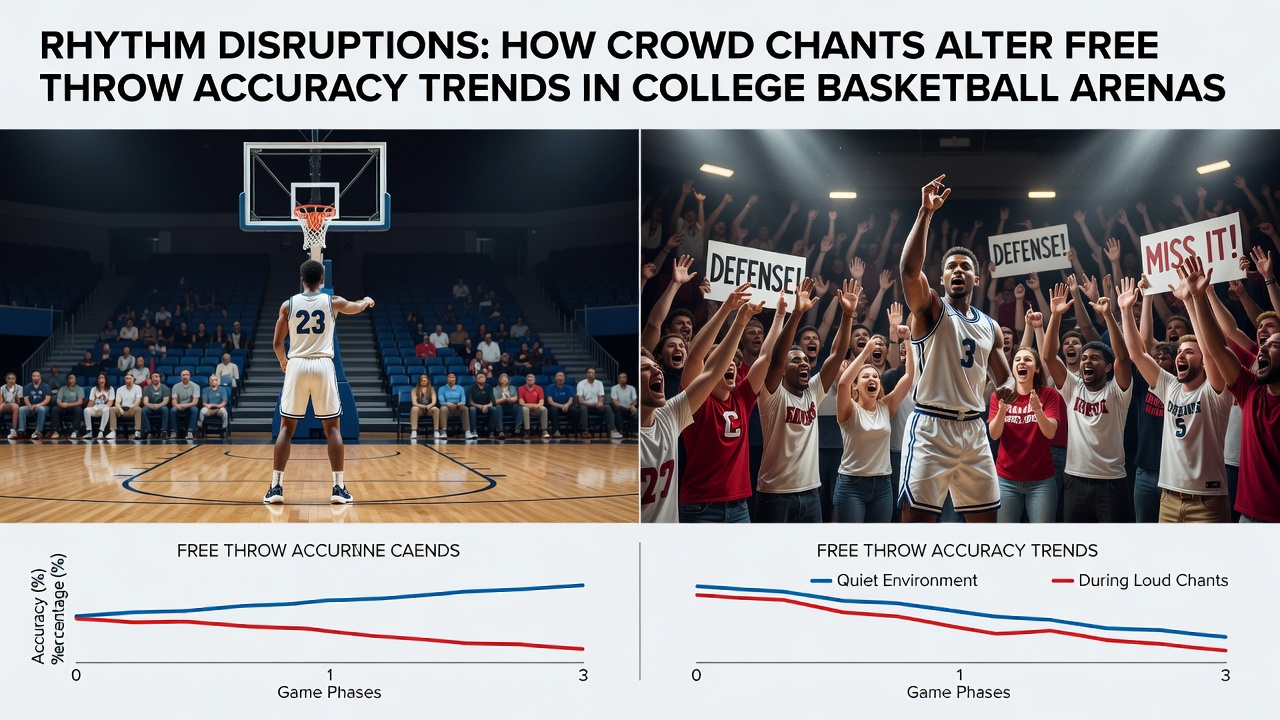
Season-long tracking also reveals that accuracy rebounds when visiting teams return to neutral-site or lower-capacity environments. In non-conference road games played in arenas under 8,000 capacity during the same period, visiting free throw percentages rose to 74.1 percent on average. This recovery pattern holds after controlling for travel distance and rest days, suggesting that acoustic conditions at specific home venues exert an independent influence on shooting outcomes.
Player Adaptation and Coaching Adjustments
Coaching staffs have responded by incorporating simulated chanting drills into practice schedules, and programs at North Carolina and Arizona now use directional speakers to replicate the rhythmic timing observed in opposing arenas. Players who participate in these sessions show reduced variability in release timing during subsequent road games, according to internal performance logs shared with conference officials. Some teams also adjust substitution patterns to keep more experienced shooters on the floor during late-game free throw situations in hostile environments.
Individual player data further illustrates adaptation differences. Guards with prior exposure to high-decibel chanting venues maintain release consistency better than those encountering such conditions for the first time. Longitudinal records from the 2023 through 2026 seasons indicate that players logging at least 12 road games in top-25 attendance arenas reduce their free throw accuracy gap by roughly half compared with their first-season road performances.
Conclusion
Records from major conference play demonstrate consistent associations between synchronized crowd chanting and shifts in free throw accuracy for visiting teams, with the largest effects concentrated in high-capacity arenas that feature organized student sections. Biomechanical measurements and seasonal statistics both point to timing disruptions during the shooting motion as a central factor. As additional programs adopt targeted preparation methods and researchers continue compiling venue-specific data through 2026, the relationship between acoustic rhythm and shooting performance remains a measurable element of college basketball game environments.