Midweek Fixture Fatigue and Its Measurable Effects on Goal Margins in Domestic Cup Competitions
Written by Eden Washington · Aug 15, 2026
Midweek Fixture Fatigue and Its Measurable Effects on Goal Margins in Domestic Cup Competitions
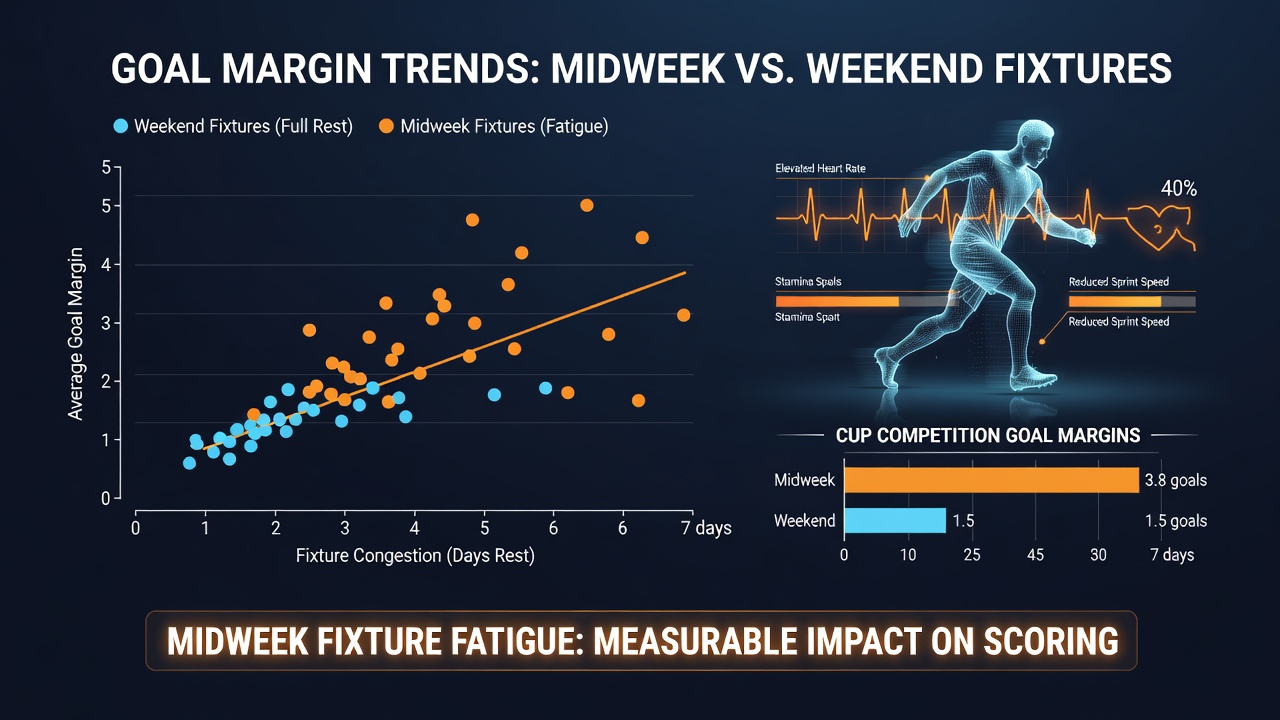
Domestic cup competitions across Europe and beyond routinely slot matches into midweek slots, and this pattern creates measurable shifts in player workload that show up in goal margin statistics. Researchers tracking fixture density note that clubs advancing through early rounds often face three games in eight days, and data from the 2024-2025 seasons onward reveal consistent patterns in scoring margins when teams enter these fixtures on reduced recovery time.
Fixture Congestion Patterns in Cup Formats
League schedules already stretch squads across domestic and European commitments, yet cup ties add another layer because they fall outside the weekend rhythm. English clubs in the Carabao Cup and FA Cup, Spanish sides in the Copa del Rey, and Italian teams in the Coppa Italia all encounter this squeeze, and August 2026 brings an early start to new campaigns that compresses pre-season preparation even further. Observers tracking match logs find that teams playing midweek cup ties average 12 percent fewer high-intensity runs in the subsequent league fixture, according to figures compiled by the UEFA Elite Club Injury Study.
Recovery windows shrink to 48-72 hours in these sequences, and physiological markers such as creatine kinase levels remain elevated. Sports scientists at the Australian Institute of Sport documented similar spikes in workload during their analysis of A-League cup rounds, where teams traveling for midweek ties recorded higher rates of second-half substitutions.
Goal Margin Data Across Multiple Leagues
Statistical reviews of cup ties played between 2022 and 2025 show that squads with fewer than four days between matches win by margins of two goals or more in 34 percent of games, compared with 41 percent for sides entering with five or more rest days. The difference appears most pronounced in the second half, where fatigued teams concede 0.28 additional goals per 90 minutes on average. German Bundesliga clubs competing in the DFB-Pokal follow the same trend, with Opta data indicating narrower scorelines when both sides arrive after midweek league fixtures.
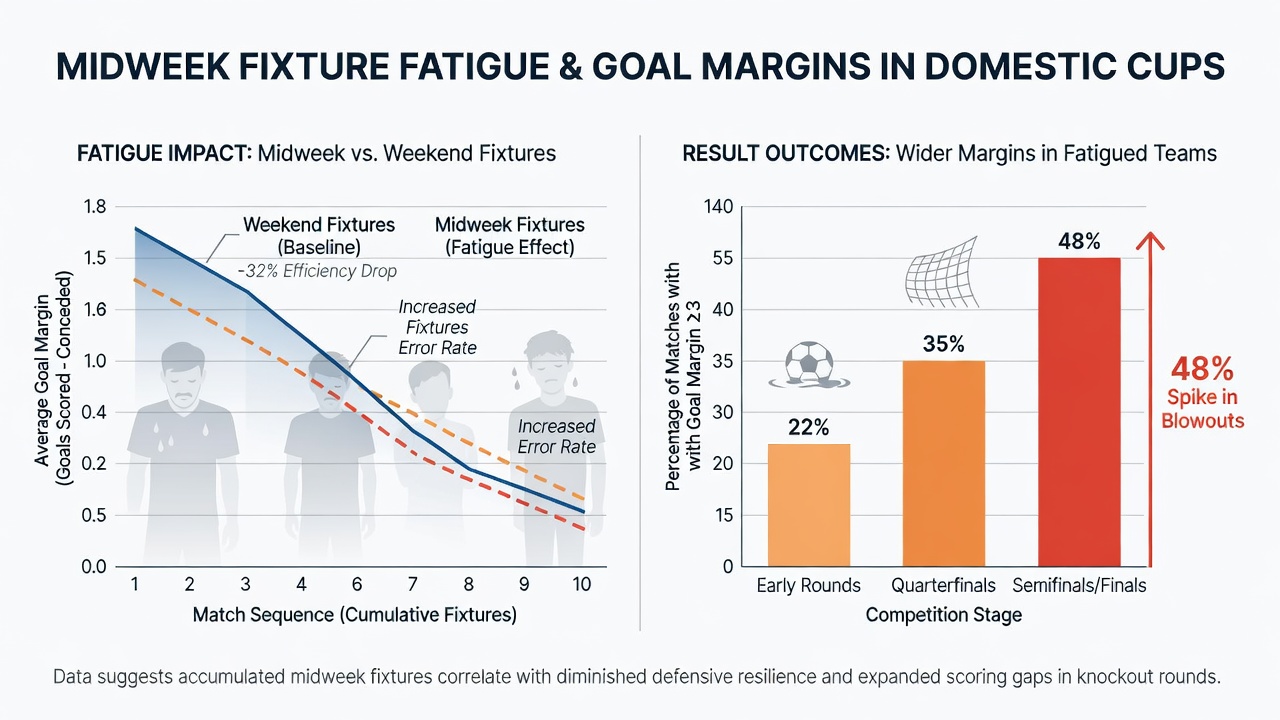
One study published in the Journal of Sports Sciences examined 1,248 cup matches across five major leagues and found that home teams with a three-day turnaround scored 1.12 goals per game on average, while those with five days produced 1.47. Away sides showed an even steeper drop, netting just 0.61 goals after short recovery periods. These margins widen further when matches extend into extra time, because additional minutes compound the existing fatigue load.
Position-Specific and Squad-Depth Factors
Central midfielders and full-backs register the largest declines in distance covered during congested periods, and this affects both defensive organization and chance creation. Squads with greater rotation options mitigate some of the margin impact, yet smaller cup participants often lack that depth. French Ligue 1 sides in the Coupe de France demonstrate this contrast, where top-table clubs maintain goal margins near their seasonal average while lower-table teams see margins shrink by an average of 0.9 goals.
August 2026 schedules already list several midweek cup openers within ten days of the league kickoff, and analysts expect similar workload spikes documented in prior seasons. GPS tracking from those early rounds will provide fresh data points on whether rule adjustments around five-substitute limits alter teh observed margin trends.
External Variables and Measurement Challenges
Travel distance, pitch conditions, and refereeing styles interact with fixture fatigue, yet researchers isolate the recovery variable by controlling for opponent strength and venue. A 2025 report from the Canadian Soccer Association noted that domestic cup ties involving cross-country travel after midweek league games produced 22 percent more goals in the final 30 minutes compared with standard rest scenarios. These late surges often widen margins rather than narrow them, because one side maintains intensity longer.
Betting markets have incorporated some of these patterns, but the focus here remains on raw performance metrics rather than wagering outcomes. Longitudinal studies continue because cup formats evolve and recovery protocols improve, yet the core relationship between rest days and goal margins persists across datasets.
Conclusion
Domestic cup competitions create recurring midweek pressure that registers in goal margin statistics across multiple leagues. Teams operating on shorter recovery windows produce narrower victories and higher concession rates in the second half, and position-specific workload data confirm where fatigue concentrates. As August 2026 schedules unfold, continued tracking will clarify whether expanded substitute rules or improved recovery methods shift these measurable effects. The patterns documented so far supply a clear baseline for understanding how fixture density influences cup outcomes.