Analyzing Broadcast Delay Impacts on Live Betting Decisions During International Soccer Matches
Written by Olivia Richter · Jul 9, 2026
Analyzing Broadcast Delay Impacts on Live Betting Decisions During International Soccer Matches
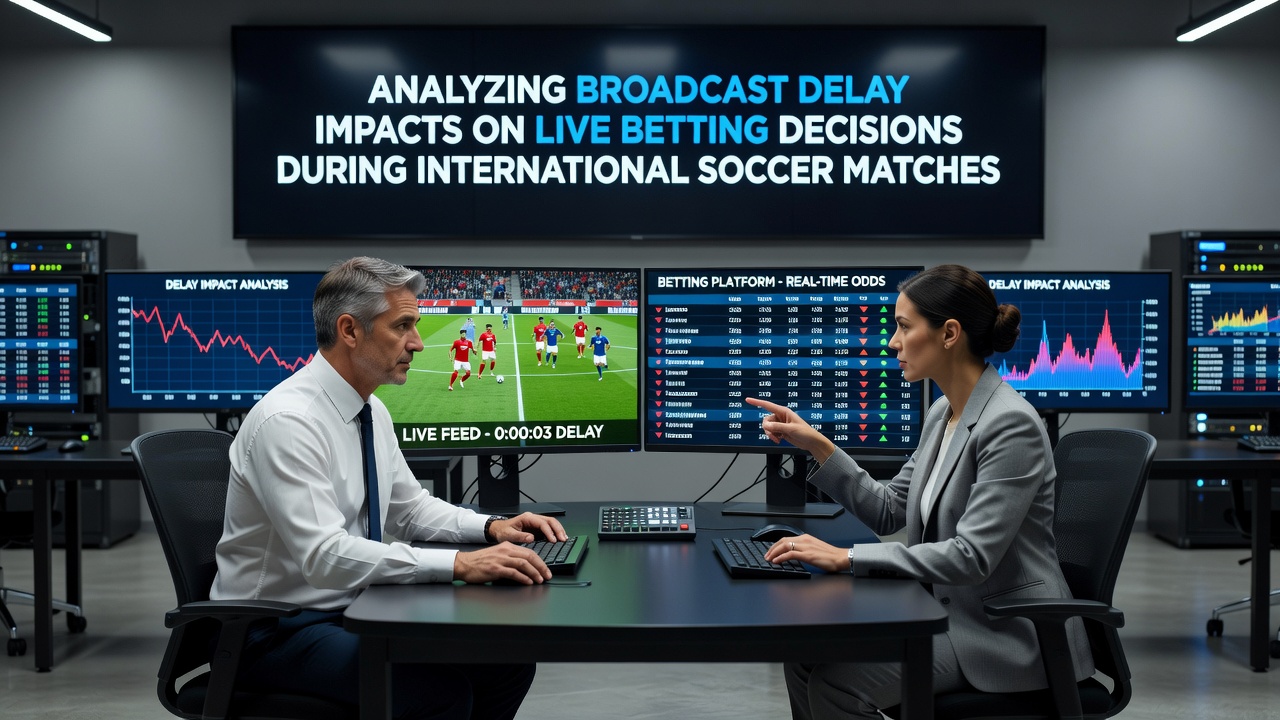
Broadcast delays in international soccer transmissions create measurable gaps between on-field events and the information reaching viewers, and these timing differences directly shape how live betting markets respond during matches. Platforms streaming matches from tournaments such as the Copa América or UEFA Nations League often introduce lags ranging from eight to forty-five seconds depending on encoding processes, network routing, and regional distribution agreements.
Those delays mean that goal notifications, card issuances, and substitution updates reach some bettors after the official data feeds have already adjusted odds. Live betting interfaces at major operators update within two to four seconds of verified incidents through direct stadium data connections, while television and app streams lag behind, and this mismatch produces distinct patterns in wager timing and market movement.
Technical Sources of Transmission Lag
Production workflows at host broadcasters introduce the first layer of delay through video encoding, graphics overlay insertion, and satellite uplink procedures. International feeds routed through multiple distribution partners add further latency, whereas direct-to-consumer platforms using adaptive bitrate streaming can compress that interval but rarely eliminate it entirely. Observers note that matches played in July 2026 across North American venues for the expanded World Cup will test these systems under heightened global viewership loads, and preliminary tests conducted by host broadcasters indicate average delays of twenty-two seconds on primary international streams.
Market Reactions to Staggered Information
Live odds engines rely on automated triggers tied to official match data rather than visual confirmation from broadcasts. When a goal occurs, betting markets typically suspend or adjust within three seconds, yet bettors relying on delayed streams continue placing wagers based on pre-event conditions. Research from the University of Melbourne Centre for Gambling Research shows that such information asymmetry correlates with elevated cancellation rates on goal-related markets in the immediate post-event window, and similar patterns appear in card and corner betting during high-stakes fixtures.
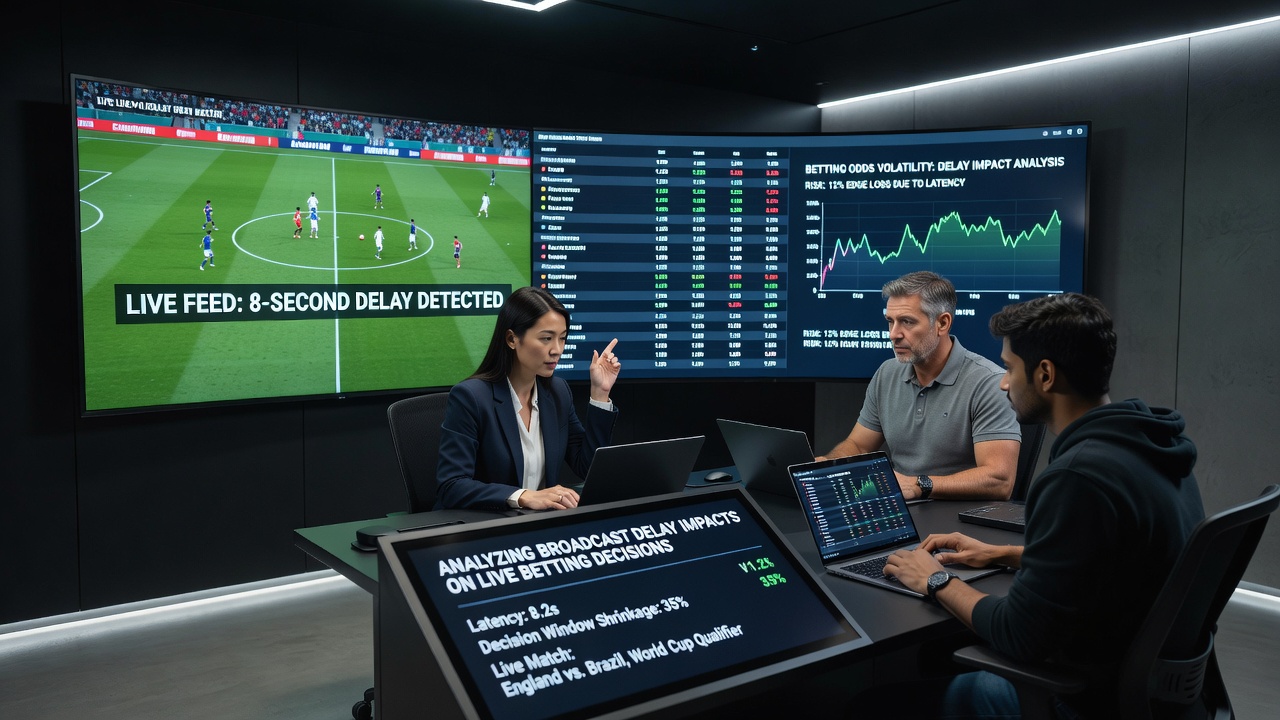
Arbitrage opportunities emerge when sharp bettors monitor multiple streams with known delay profiles and cross-reference them against official timing data. One documented case from the 2025 FIFA Club World Cup final demonstrated that operators in certain jurisdictions experienced a temporary spike in matched wagers on both teams to score markets precisely because one group of users operated on a feed delayed by thirty-one seconds while another accessed near-synchronous data.
Regional Regulatory Perspectives
Authorities in different jurisdictions address these timing issues through varying disclosure requirements. The Australian Communications and Media Authority has examined how broadcast latency affects consumer information access in wagering contexts, while the Canadian Centre for Gaming Research published analysis of synchronization standards between data providers and visual feeds. These studies indicate that operators who maintain transparent delay disclosures experience lower dispute volumes related to live market timing.
During the July 2026 international window, several European operators introduced optional low-latency stream toggles for verified account holders, and early adoption metrics released by the European Gaming and Betting Association reveal uptake rates above thirty percent among users placing in-play soccer wagers.
Strategic Adjustments by Bettors and Operators
Experienced market participants often calibrate their decision windows by testing the specific delay of their chosen broadcast source against known data timestamps. This calibration allows them to avoid acting on information that has already moved official markets. Operators, meanwhile, have implemented additional confirmation layers for high-velocity markets such as next goal or next card, requiring explicit acknowledgment of potential stream discrepancies before wager acceptance.
Those adjustments reduce exposure while preserving market liquidity, and data from major platforms indicates that markets with explicit timing disclaimers maintain steadier volume throughout matches compared with those lacking such notices.
Conclusion
Broadcast delays remain an inherent feature of global soccer transmissions, and their influence on live betting decisions continues to evolve alongside improvements in streaming technology and data integration. Operators and regulators across multiple regions have begun addressing synchronization challenges through disclosure standards and platform enhancements, particularly as preparations advance for the 2026 World Cup. The interplay between visual feeds and official data streams will likely stay central to how participants navigate in-play wagering environments in the coming cycles.